
2026-10-24 · Elias Vance
Tree Root Intrusion in Athens Drain Lines Near the University Area
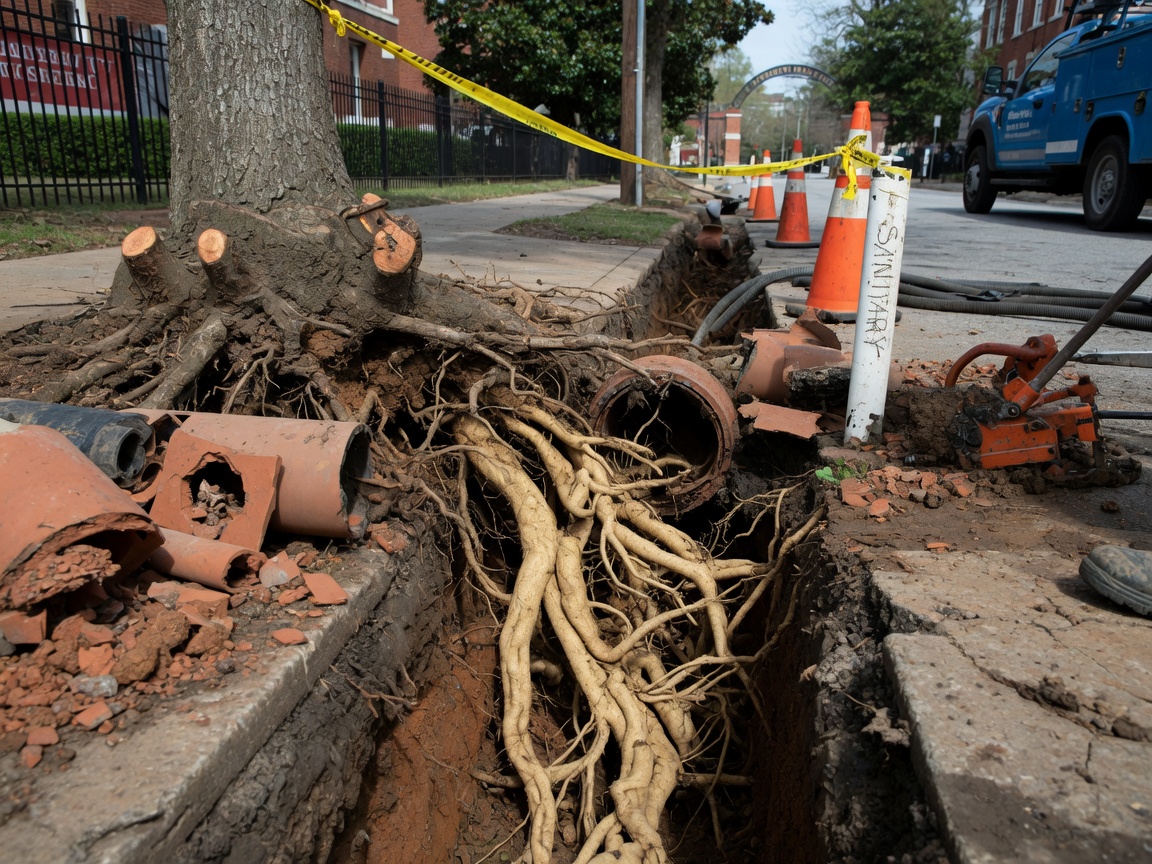
Tree root intrusion into drain lines near the University of Georgia is a very common issue, primarily due to the area's mature tree canopy, humid subtropical climate, and the age of much of the housing stock. Older homes in neighborhoods like Five Points, Normaltown, and Boulevard often have original clay or cast-iron sewer lines, which are more susceptible to root penetration than modern PVC pipes. The expansive root systems of trees, seeking moisture and nutrients, can exploit even the tiniest cracks or loose joints in these older pipes, leading to slow drains, recurring clogs, and eventually, significant damage that requires professional intervention. Addressing these issues promptly is crucial to prevent costly repairs and maintain the integrity of your home's plumbing system.
Why Tree Roots Seek Drain Lines in Athens
Athens, located in Clarke County, boasts a beautiful, mature landscape, especially around the University of Georgia campus, Sanford Stadium, and the State Botanical Garden of Georgia. While these trees contribute to the city's charm, their extensive root systems are constantly searching for water. Drain lines, particularly those with minor leaks or condensation on their exterior, become an irresistible water source. The humid subtropical climate, characterized by hot summers and mild winters, means the ground rarely freezes deep enough to deter root growth year-round. This consistent growth, combined with the occasional drought stress in summer, drives roots deeper and wider in search of hydration, making drain lines prime targets.
Many homes in areas like Downtown Athens and East Athens, some dating back decades, were built with sewer lines made of materials like clay tile or cast iron. These materials, over time, can develop hairline cracks, shift due to soil movement, or have joints that are no longer perfectly sealed. Unlike the seamless, flexible nature of modern PVC pipes, these older materials offer easy entry points for fine tree roots. Once inside, these roots thrive on the constant flow of water and nutrients, growing thicker and creating a dense network that can completely obstruct the pipe's flow. This is a common scenario we encounter when performing main sewer line cleaning in these historic neighborhoods.
Identifying Signs of Tree Root Intrusion
Recognizing the early warning signs of tree root intrusion can save homeowners in Athens from more extensive damage and costly repairs. Ignoring these indicators often leads to complete blockages and potential sewer backups. Here are some key signs to watch for:
- Slow Drains: If multiple drains in your home, such as your kitchen sink, bathroom sink, or shower, are draining noticeably slower than usual, it could indicate a growing obstruction in your main sewer line. While a single slow drain might be a localized clog, widespread slowness points to a larger issue.
- Recurring Clogs: Are you frequently dealing with clogs that temporarily clear but quickly return? This is a classic symptom of tree roots. The roots act like a filter, catching debris, grease, and other waste, leading to repeated blockages even after attempts to clear them with plungers or chemical drain cleaners.
- Gurgling Sounds: Unusual gurgling noises coming from toilets or drains, especially after flushing or using water elsewhere in the house, can signal air trapped behind a partial blockage caused by roots.
- Foul Odors: A persistent, unpleasant sewer gas smell emanating from drains, particularly in the bathroom or basement, suggests that wastewater is not flowing freely and is likely backing up within the pipes, often due to a root blockage.
- Lush Patches in Yard: If you notice unusually green or lush patches of grass directly above your sewer line, it could mean that the line is leaking water and nutrients, feeding the vegetation above it. This is a clear indicator of a compromised pipe.
- Wastewater Backups: The most severe sign is wastewater backing up into sinks, tubs, or toilets. This indicates a complete blockage, often requiring emergency drain cleaning to prevent property damage.